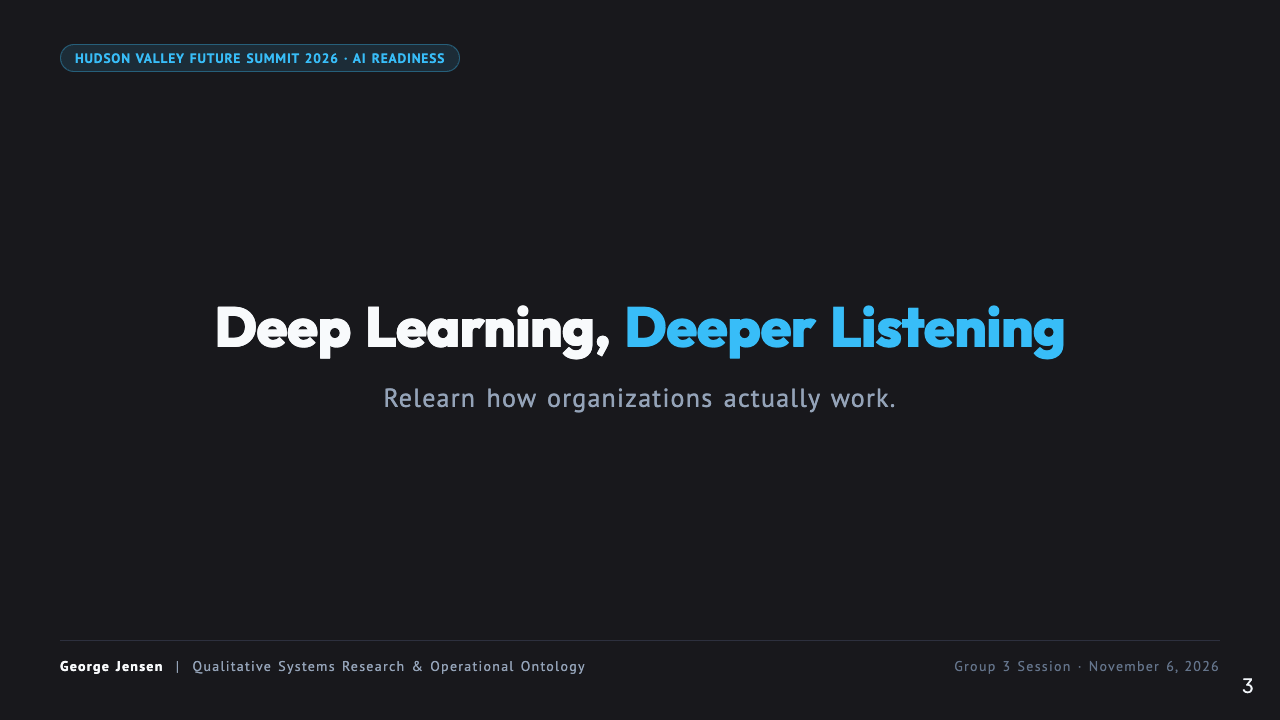
The Culture Shift Behind AI Readiness
Deep learning taught machines to find patterns in enormous amounts of data. As machines learn more deeply, we have to listen more deeply: to each other, and to the people who actually do the work.
Six slides from my two talks, with a little of what I'll say under each.
The Culture Shift Behind AI Readiness
Deep learning taught machines to find patterns in enormous amounts of data. As machines learn more deeply, we have to listen more deeply: to each other, and to the people who actually do the work.
Advancing AI Knowledge Work
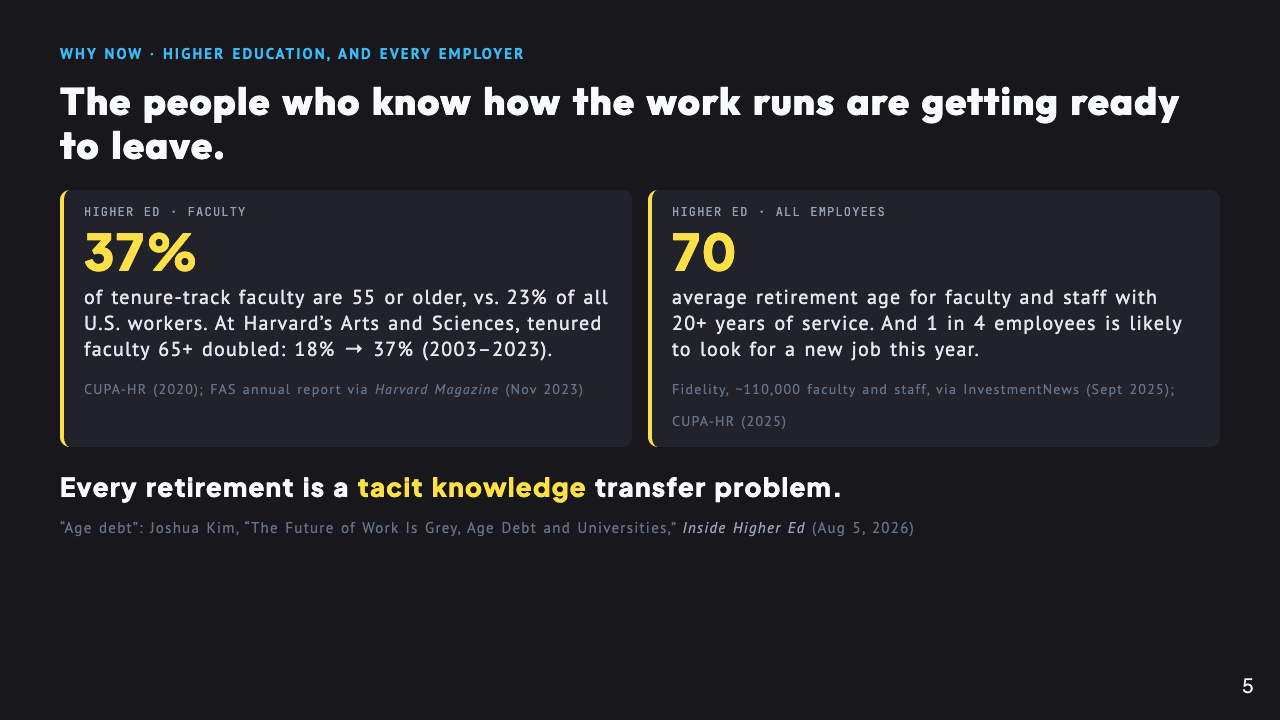
More than a third of tenure-track faculty are 55 or older, and long-serving staff retire around 70. When they leave, decades of know-how leave with them. Every retirement is a tacit knowledge transfer problem.
Advancing AI Knowledge Work
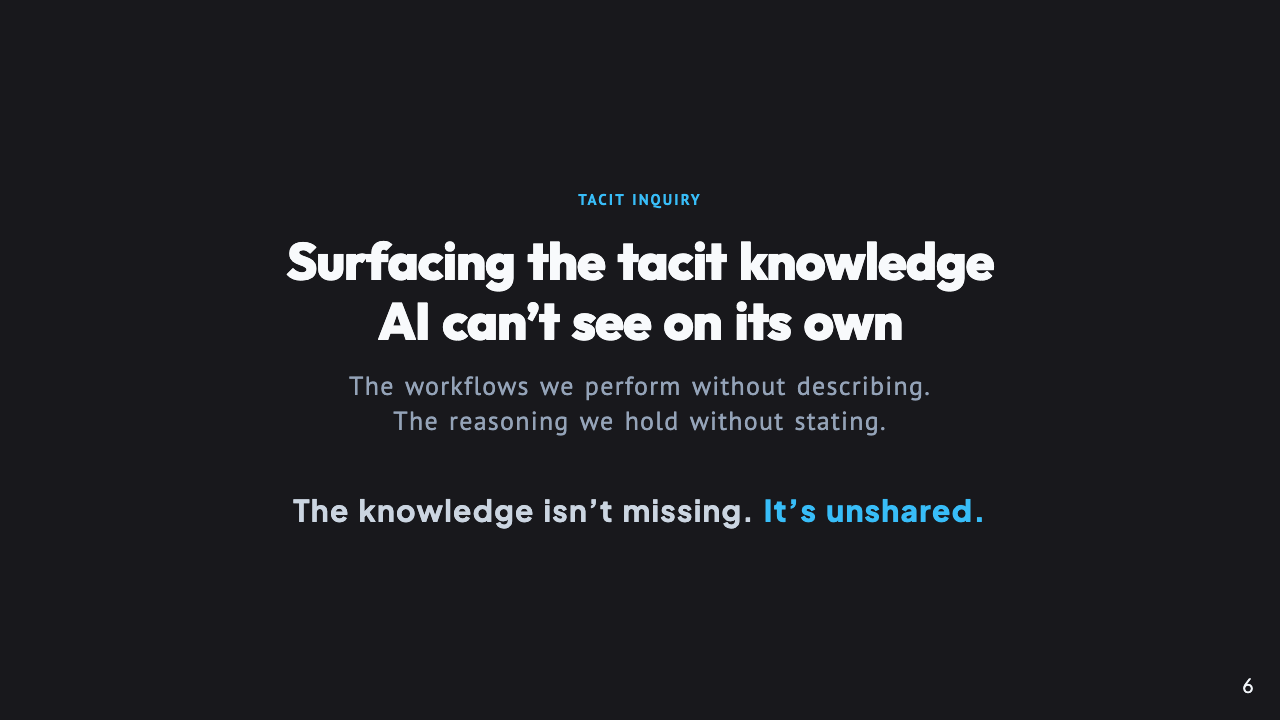
Tacit knowledge is what people know and do but have never put into words: the workarounds, handoffs and judgment calls. Tacit Inquiry is the research method I use to surface it, one plain, direct conversation at a time.
The Culture Shift Behind AI Readiness
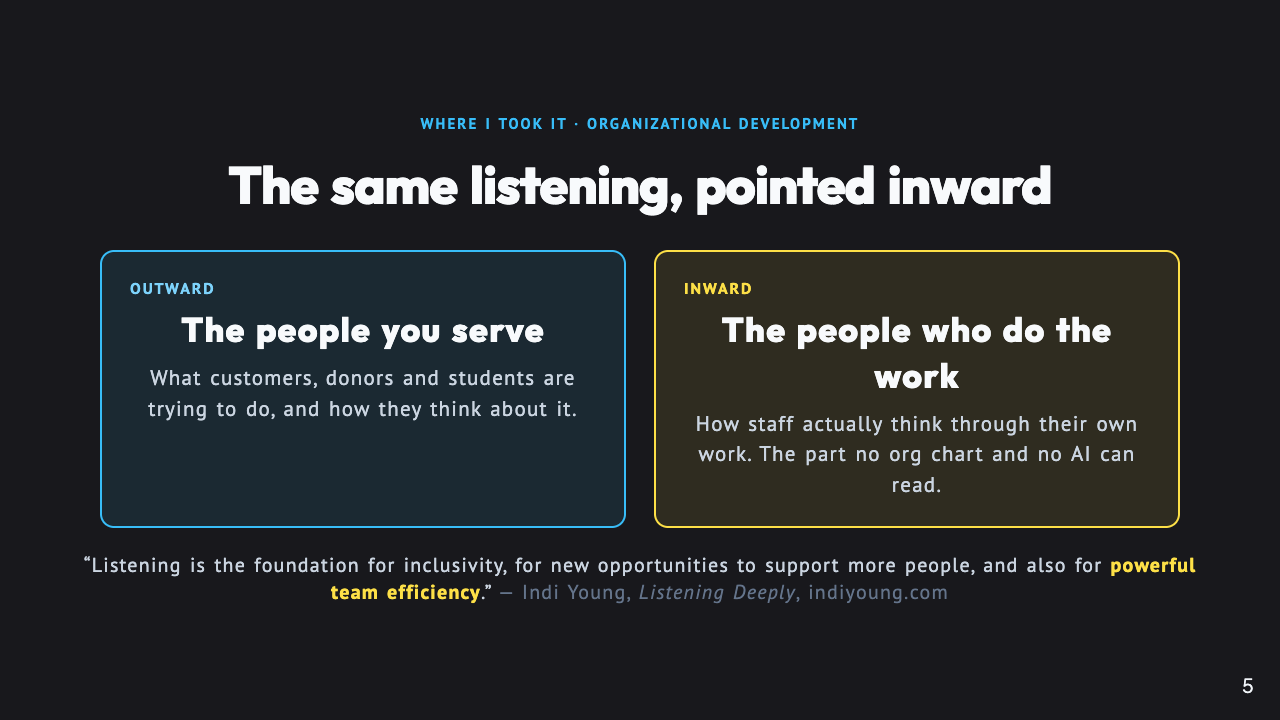
Researchers usually point their listening outward, at customers. Organizational development points it inward, at staff: how they think through their work, and what nobody wrote down.
Advancing AI Knowledge Work
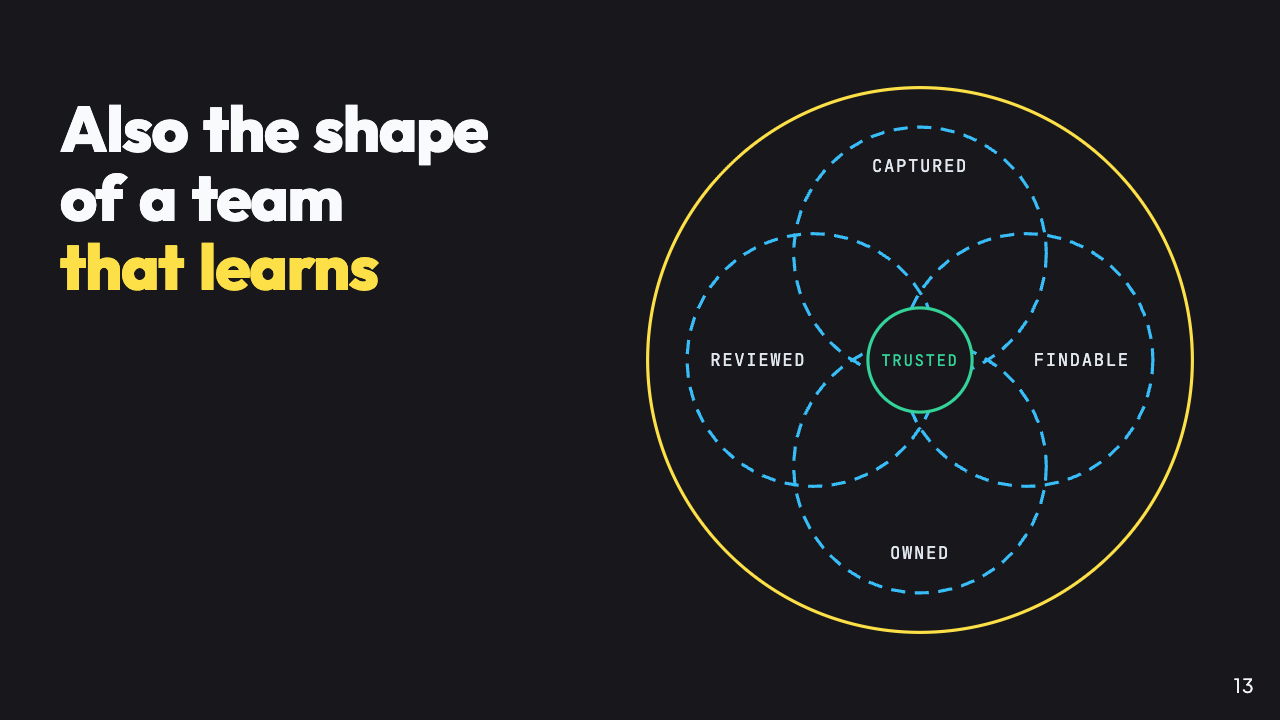
Knowledge lasts when it's captured, reviewed by the person who does the work, owned, and findable. Where all four overlap, a team can trust it, and so can its AI tools.
Advancing AI Knowledge Work
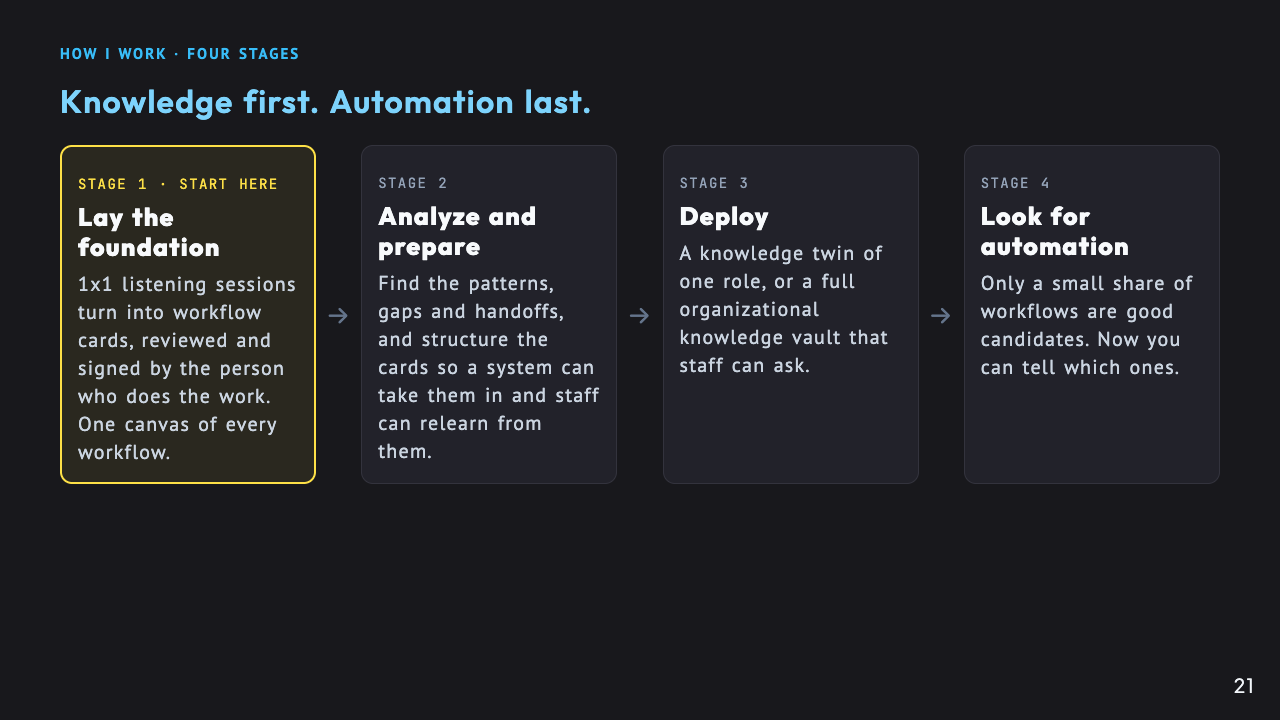
Start with listening sessions and workflow cards each person signs. Analyze them, then build a knowledge vault staff can ask. Only then look for automation.